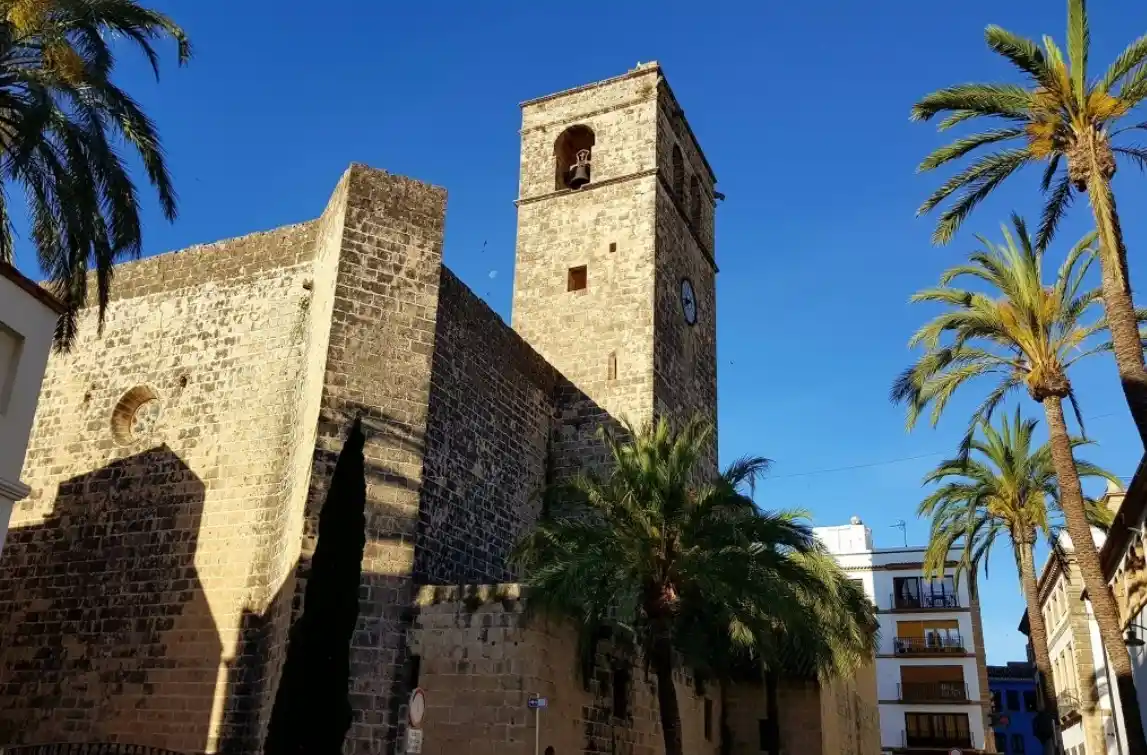
The old town of Jávea (Xàbia) is one of the oldest and most charming areas of this municipality on the Costa Blanca (Alicante). Its origin dates back to the Middle Ages, when the population settled around an old fortification to protect themselves from pirate attacks that ravaged the Mediterranean coast. The urban structure still preserves today that medieval layout of narrow and cobbled streets, with traditional houses of rough stone in honey tones that recall the defensive and rural past of the town.
Historic center and distribution
The heart of the old town is the Plaza de la Iglesia and its surrounding streets (e.g. Calle Mayor, Loreto, Virgen del Pilar or San José), where most of the monuments, squares and historical buildings that show traditional urban development are concentrated. This nucleus is surrounded by remains of old walls, hidden squares and small squares where bars, artisan shops and cafes are mixed today.
What to see and visit
Church-Fortress of San Bartolomé
It is the heritage symbol of the old town. Built between the fourteenth and sixteenth centuries in Elizabethan Gothic style, it has thick walls and defensive elements because it also served as a refuge against pirate attacks. Its tower is visible from a large part of Jávea and today it is an essential historical monument.
Municipal Food Market
Since the mid-20th century, this market has been the local meeting point for traditional fresh products: fruits, vegetables, fish, cheeses and local specialities. It is located next to the church and maintains an authentic and lively atmosphere.
Soler Blasco Archaeological and Ethnographic Museum
Housed in an old 17th-century palace house, it offers an in-depth insight into the history of Jávea, showcasing artefacts from the Iberian era to medieval and modern times.
Riurau d’Arnauda and Montaner Park
A few meters from the historic center is this example of traditional agricultural architecture, where grapes were dried to make raisins. Restored and located in a park, it is now a space for cultural activities and relaxation.
Remains of medieval walls
You can still see parts of the old walls that defended the old town, witness to the town’s defensive past.
Plaza del Convent and traditional squares
Small squares that offer perfect corners to have a drink, observe local life or enjoy events such as weekly markets or traditional activities.
What to do
- Stroll through its cobbled streets: the old town is ideal for discovering on foot its historical corners, facades, balconies with flowers and small architectural details.
- Tapas and local gastronomy: throughout the area you will find bars and restaurants with traditional tapas and Mediterranean specialties.
- Weekly market: every Thursday an open-air market is held in the Plaza de la Constitución with regional products.
How to get there
The old town is very well connected and accessible:
- By car: if you are coming from Alicante or Valencia, the most common thing to do is to take the AP-7 motorway and exit towards Benissa/Teulada (exit 63), then continue on the CV-734 to Jávea.
- By bus: there are frequent connections from nearby cities such as Dénia, Benidorm, Valencia or Alicante, with a stop a short distance from the historic center.
- On foot or by bike: from the Port or the Arenal beach you can walk or cycle to the old town in about 15-20 minutes following signposted routes.
For those arriving by car, there are parking areas around the Plaza de la Constitución, making it easy to leave your vehicle and explore the historic area quietly.
Festivals and local life
The old town is not only history; it is also the centre of many traditional festivals, such as the celebrations in honour of San Sebastián in January, Jesús Nazareno in spring or the famous Fogueres de Sant Joan in June, with events, music, fireworks and popular activities that fill the streets with life.
The old town of Jávea is much more than a set of monuments: it is a living journey through centuries of Mediterranean history, with medieval fortifications, emblematic churches, traditional markets, museums and streets full of atmosphere and culture. It is one of the places that best connects the visitor with the history, heritage and local life of this jewel of the Costa Blanca.